

Unlocking Success – The Essential Soft Skills Every Developer Must Cultivate
In the fast-paced and highly technical world of software development, technical prowess often takes center stage. However, essential soft skills for developers are equally vital in ensuring successful project delivery, effective teamwork, and career growth. These skills foster better communication, adaptability, and emotional intelligence, transforming developers from mere coders into valuable team players and innovative problem-solvers. Developing these soft skills can dramatically influence your professional journey and the overall impact of your work in the tech industry.
Introduction: The Undervalued Importance of Soft Skills for Developers

While many aspiring developers focus on mastering programming languages, data structures, and frameworks, the significance of soft skills for developers is frequently underestimated. These skills are the backbone of effective collaboration and project management, influencing how well a developer interacts with team members, stakeholders, and end-users. Soft skills such as communication, empathy, and adaptability are what allow technical experts to translate their complex ideas into actionable solutions and align their efforts with broader organizational goals. Ignoring their development often leads to misunderstandings, conflict, or stalled projects, regardless of how technically competent a developer might be.
Moreover, in an era where remote work, Agile methodologies, and cross-functional teams are common, soft skills have become even more crucial. They empower developers to navigate cultural differences, manage time efficiently, and adapt quickly to changing technologies and project scopes. Recognizing and honing these essential qualities can distinguish a good developer from a great one — someone who not only writes excellent code but also drives projects forward through leadership, empathy, and strategic communication.
Communication – Bridging the Gap Between Code and Collaboration

Effective communication is arguably the most critical soft skill for developers because it bridges the often-gulfed worlds of technical detail and business or user needs. Developers must articulate complex ideas clearly to non-technical stakeholders, ensuring everyone understands project constraints, progress, and challenges. It’s not simply about writing documentation or giving updates, but also actively listening to feedback, asking clarifying questions, and translating user requirements into functional specifications.
Good communication involves more than spoken or written words; it requires emotional intelligence and active listening to cultivate a mutual understanding. For developers, honing this skill means mastering the art of conveying technical concepts in an accessible manner, fostering transparency, and avoiding misunderstandings. In fast-paced environments, the ability to communicate effectively can streamline workflows, speed up decision-making, and prevent costly rework, ultimately leading to more successful and cohesive project outcomes.
Teamwork and Collaboration – Fostering a Productive Development Environment
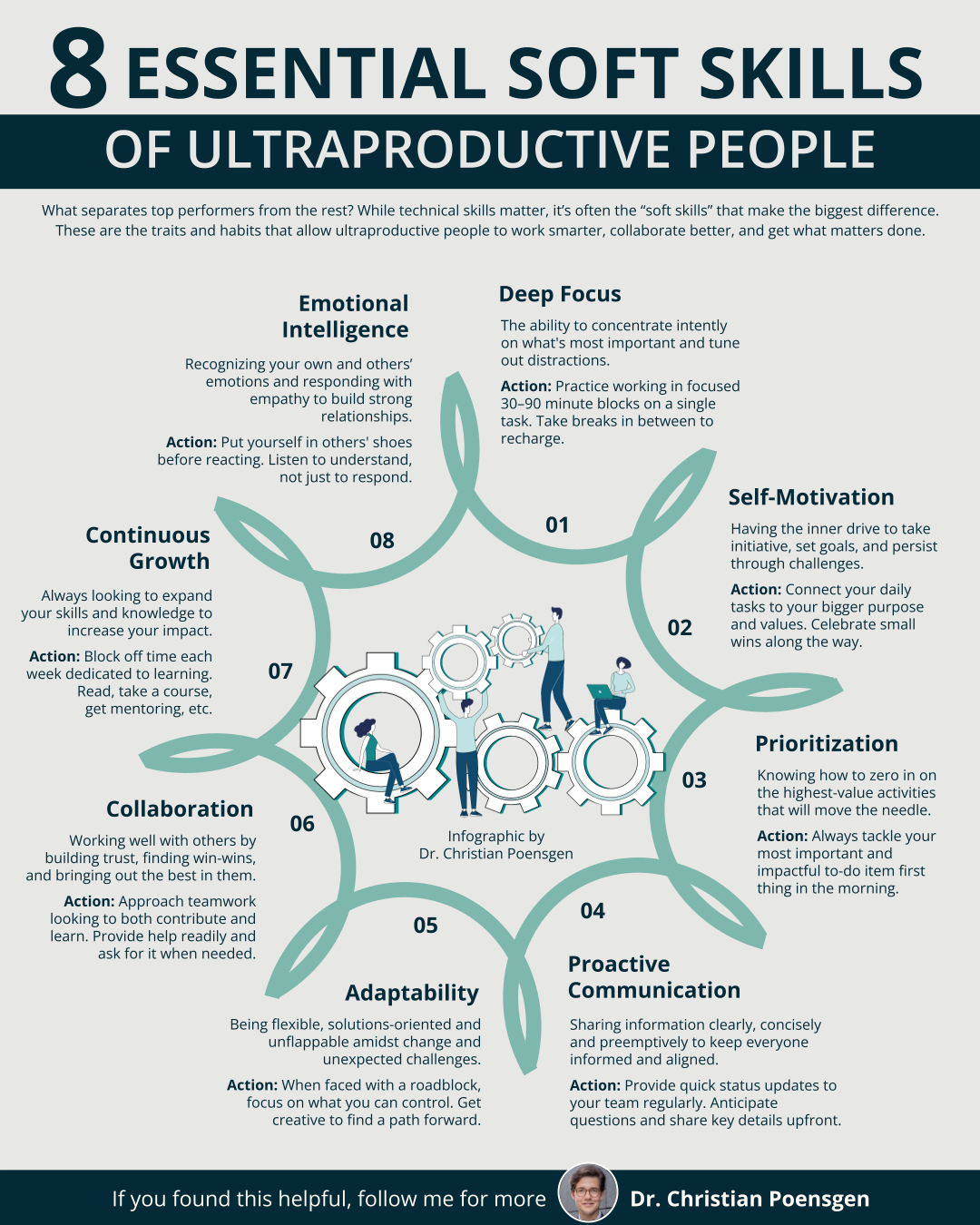
No matter how brilliant a developer is, their success is rarely achieved in isolation. The essence of a thriving development environment lies in teamwork and collaboration. Embracing a collaborative mindset involves being open to diverse perspectives, sharing knowledge generously, and valuing collective success over individual achievement. These qualities encourage an atmosphere where innovation flourishes, problems are tackled from multiple angles, and team members support each other’s growth.
Beyond technical competence, the soft skills for developers related to teamwork include adaptability, conflict resolution, and humility. For instance, effective collaboration often requires compromise, patience, and the ability to handle constructive criticism without defensiveness. Building a culture of trust and mutual respect unleashes the full potential of the team, leading to higher quality products and more engaged, motivated individuals. In a rapidly evolving industry, those who excel in collaborative settings are often better equipped to learn from others, adapt to new methodologies, and drive continuous improvement.
Problem-Solving and Critical Thinking – Beyond Debugging, Addressing Underlying Issues
While debugging is a significant aspect of problem-solving, soft skills for developers extend far beyond fixing errors. Critical thinking involves analyzing problems from multiple perspectives, questioning assumptions, and identifying root causes rather than just symptoms. Developers with strong problem-solving skills actively seek innovative solutions, leverage diverse information sources, and consider long-term implications to deliver robust and scalable systems.
Cultivating this mindset requires patience, curiosity, and resilience. In complex projects where constraints and conflicting interests often collide, the ability to think critically helps developers prioritize tasks, negotiate trade-offs, and innovate under pressure. Such skills ultimately reduce technical debt, improve system stability, and allow developers to anticipate potential issues before they manifest — making them invaluable assets to any team or organization striving for excellence.
Adaptability and Learning Agility – Thriving in a Constantly Evolving Tech Landscape
The tech industry is characterized by rapid change — new frameworks, languages, and paradigms emerge with astonishing frequency. Therefore, essential soft skills for developers include adaptability and learning agility, which enable professionals to stay relevant and innovative. An adaptable developer actively seeks out new knowledge, remains open to feedback, and welcomes change as an opportunity for growth rather than a threat.
Developing these skills involves cultivating a growth mindset, where setbacks become learning opportunities and curiosity drives continuous improvement. Organizations value developers who can quickly pick up a new technology, pivot when project requirements shift, or reconfigure their approach to problem-solving as needed. In essence, agility fosters resilience and helps developers thrive in an ever-changing landscape — ensuring ongoing career relevance and contribution.
Emotional Intelligence and Empathy – Building Stronger Relationships and Understanding User Needs
Emotional intelligence and empathy are often overlooked but are essential soft skills for developers who aim to work effectively with others and deliver user-centered solutions. These qualities facilitate stronger relationships within teams, reduce conflicts, and enhance leadership capabilities. When developers understand their own emotions and can recognize those of colleagues and users, they cultivate a harmonious environment and foster trust and collaboration.
Furthermore, empathy allows developers to see beyond technical specifications and truly understand user pain points, desires, and contexts. This understanding leads to more intuitive, accessible, and impactful products. Cultivating emotional intelligence helps developers communicate thoughtfully, accept feedback gracefully, and build connections that empower teams to innovate and serve users better. It transforms technical expertise into meaningful solutions that resonate with real-world needs.
Conclusion
In the increasingly competitive and collaborative landscape of software development, mastering essential soft skills for developers is just as vital as honing technical proficiency. Communication, teamwork, problem-solving, adaptability, and emotional intelligence are the pillars that support sustainable success and professional growth. These skills foster not only better individual performance but also stronger teams capable of tackling complex challenges with agility, empathy, and confidence. By investing in the development of these soft skills, developers can unlock their full potential, contribute more meaningfully to their organizations, and leave a lasting impact on the dynamic world of technology.
🚀 Preparing for tech interviews?
Boost your skills with IT Interview Prep — practice real questions, track your progress, and get ready to ace your next interview!
👉 Download now on Google Play








-
Tagged flutter, mobile-dev, react-native