

What Is a Full-Stack Developer – Unraveling the Versatile Tech Maestro of the Digital Age
In the rapidly evolving world of software development, the term full-stack developer has gained significant prominence. But what is a full-stack developer, and why are they deemed essential in today’s tech landscape? Essentially, a full-stack developer is a versatile programming professional capable of working on both the client and server sides of web applications. These developers possess a comprehensive skill set that allows them to design, develop, and maintain complex applications end-to-end, bridging the gap between front-end user interfaces and back-end server logic. As the digital ecosystem becomes increasingly integrated and sophisticated, understanding what a full-stack developer does offers valuable insight into modern software creation and team dynamics.
Defining the Full-Stack Developer Role: Responsibilities and Scope

A full-stack developer’s responsibilities extend across all layers of web development, from visual elements users interact with to the underlying infrastructure that powers the application. On the front end, they craft the user interface using HTML, CSS, JavaScript, and popular frameworks such as React, Vue.js, or Angular. This requires not only technical expertise but also an eye for design and user experience. Meanwhile, on the back end, they implement server-side logic, manage databases, handle API integrations, and ensure system security and scalability. The scope of their work often includes deployment, testing, and troubleshooting, making them invaluable for agile development environments that emphasize rapid iteration and comprehensive understanding.
This multifaceted role demands a blend of technical skills, problem-solving ability, and adaptability. Full-stack developers often act as the glue that holds a development team together, translating client requirements into functional features while maintaining overall system integrity. They are involved throughout the entire development life cycle, from initial conception and design to deployment and ongoing maintenance. This broad responsibility scope also means staying updated with a wide array of technologies and best practices, often requiring continuous learning and skill refinement. Their adaptability and holistic approach make full-stack developers uniquely positioned to oversee projects in their entirety, steering them from idea to implementation with efficiency and expertise.
Essential Skills for Aspiring Full-Stack Developers: A Comprehensive Overview
To excel as a full-stack developer, one must master a diverse set of skills that span multiple domains of technology. Fundamental programming skills in languages like JavaScript, Python, or Java form the core of their technical toolkit. Front-end proficiency requires knowledge of HTML5, CSS3, and JavaScript frameworks—skills that enable the crafting of responsive and engaging user interfaces. On the back end, expertise with server frameworks such as Node.js, Django, or Spring Boot, along with database management systems like MySQL, PostgreSQL, or MongoDB, is critical. Knowing how to design RESTful APIs, implement authentication, and manage data flow is also essential for building robust, secure applications.
Beyond raw coding ability, a full-stack developer must possess soft skills like problem-solving, critical thinking, and effective communication. Architectural understanding of scalable system design and integration patterns helps in building maintainable apps that serve long-term goals. Familiarity with version control systems like Git and collaboration tools such as Jira or Slack play a pivotal role in team environments. Additionally, staying updated with emerging trends, such as serverless architectures or containerization with Docker, ensures that a full-stack developer remains competitive and innovative. Developing these skills forms a solid foundation for a career that is both challenging and rewarding, allowing these professionals to navigate complex projects confidently from start to finish.
The Full-Stack Technology Stack: Front-End, Back-End, and Beyond
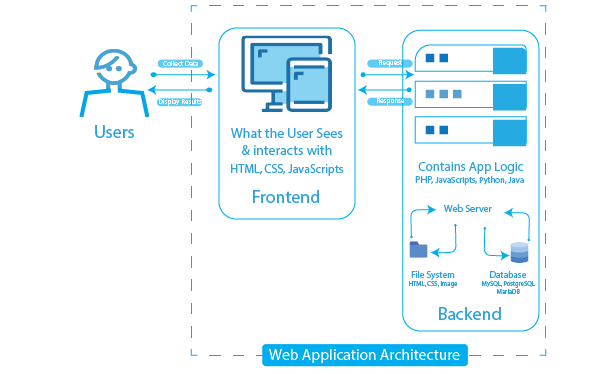
The essence of the full-stack developer role lies in mastery over a comprehensive technology stack, encompassing everything from visual presentation to server management. On the front end, they utilize HTML, CSS, and JavaScript to create the layout, styling, and interactive elements that shape the user experience. Front-end frameworks like Angular, React, or Vue.js streamline development by providing modular, component-based architectures that enhance reusability and efficiency. For many developers, the challenge is not just building a visually appealing website but ensuring it performs seamlessly across different devices and browsers.
On the back end, full-stack developers work with server-side languages such as Node.js, Python, Ruby, or Java, often leveraging frameworks like Express.js or Django to structure their code. They handle data storage, retrieval, and security, creating APIs that connect the front end with databases like MySQL, MongoDB, or Firebase. Beyond these core layers, modern full-stack development increasingly involves cloud services (AWS, Azure), DevOps practices, containerization, microservices architecture, and automated testing. This expansive knowledge enables them to create scalable, resilient applications that meet diverse user needs. The full-stack approach emphasizes flexibility, encouraging developers to understand and contribute to all parts of the technology environment, fostering innovation and agility in software projects.
Advantages of Hiring Full-Stack Developers: Efficiency and Cost-Effectiveness
Employing full-stack developers offers strategic advantages that are particularly compelling for startups, small businesses, and projects with limited resources. Their ability to handle both front-end and back-end coding reduces dependency on specialized teams, streamlining communication and accelerating project timelines. With one person overseeing multiple layers of development, teams experience fewer bottlenecks, quicker iteration cycles, and a more cohesive approach to problem-solving. This versatility allows businesses to adapt rapidly to changing requirements without the need to coordinate with multiple specialists, ultimately boosting productivity and responsiveness.
From a cost perspective, hiring full-stack developers can be more economical than recruiting separate front-end and back-end specialists, especially for projects with constrained budgets. These developers serve as a flexible resource capable of wearing multiple hats, which translates into fewer personnel costs and simplified management. Moreover, their holistic understanding of the entire system enables them to identify potential issues early, reducing long-term maintenance costs and fostering sustainable growth. While full-stack developers may require ongoing learning to stay current, their multi-disciplinary expertise provides a resilient foundation for dynamic, evolving projects—making them invaluable assets in achieving technical excellence with optimized expenditure.
Career Path for Full-Stack Developers: Growth Opportunities and Future Trends
The career trajectory for full-stack developers is both promising and dynamic, with ample opportunities for advancement into technical leadership roles such as technical architect, development manager, or CTO. As their experience grows, they often transition into roles with a broader strategic scope, influencing product vision and organizational technology decisions. The versatile skill set they develop—encompassing various programming languages, frameworks, and system design principles—positions them as highly employable candidates across industries, from startups to Fortune 500 companies. Moreover, the demand for full-stack experts continues to rise as companies seek to reduce complexity and foster agile development practices.
Looking ahead, the future of full-stack development is shaped by emerging technological trends, including serverless computing, artificial intelligence, and edge computing. Developers who stay ahead of these trends can leverage new tools and platforms to create more innovative, efficient, and scalable applications. Continuous learning becomes essential to thrive in this landscape, pushing full-stack developers to expand their expertise into related fields like DevOps, cybersecurity, or data science. As the technology ecosystem evolves, the full-stack developer role will remain vital, acting as a bridge between disciplines and enabling organizations to adapt swiftly to digital transformation challenges. For ambitious developers, this career path offers not only professional growth but the chance to be at the forefront of technological innovation.
Full-Stack Development: An Evolving Landscape Demanding Continuous Learning
The field of full-stack development is far from static; it is a constantly shifting landscape driven by technological innovation and changing user expectations. To remain effective, full-stack developers must embrace continuous learning, staying abreast of new frameworks, languages, and best practices. For example, the rise of component-based front-end frameworks necessitates understanding modern JavaScript workflows, while the proliferation of cloud services has expanded back-end capabilities exponentially. This environment champions adaptability, where the ability to quickly learn and implement new tools is often a key differentiator for success.
Ultimately, the evolving nature of full-stack development makes it an exciting yet demanding career choice. Developers are encouraged to cultivate a mindset of lifelong learning, engage with developer communities, and participate in ongoing education through courses, conferences, and self-study. Their versatility and adaptability not only benefit their personal growth but also significantly impact their teams and organizations by fostering innovation and resilience. This continuous evolution ensures that full-stack developers remain central players in creating future-proof applications and shaping the digital world. It is a role that celebrates curiosity, versatility, and commitment to excellence—traits that are essential in navigating the complexities of modern software development.
Conclusion
In essence, understanding what a full-stack developer entails reveals a multifaceted professional capable of bridging the gap between technology domains to deliver comprehensive web solutions. Their responsibilities span designing engaging user interfaces, implementing robust server logic, managing databases, and integrating emerging technologies—all while continuously learning and adapting. The advantages of hiring full-stack developers—including efficiency, cost savings, and agility—make them highly valuable assets for modern organizations. With abundant growth opportunities and a future driven by innovation, full-stack development remains a dynamic and rewarding career pathway. As technology advances, these developers will continue to evolve, shaping the digital landscape with their versatility and expertise, truly embodying the spirit of a full-spectrum tech maestro.
🚀 Preparing for tech interviews?
Boost your skills with IT Interview Prep — practice real questions, track your progress, and get ready to ace your next interview!
👉 Download now on Google Play









-
Tagged flutter, mobile-dev, react-native