

How to Write a Professional Developer CV That Stands Out – Essential Tips for Tech Talent
Developers play a pivotal role in today’s digital-driven world, and crafting a compelling CV is essential to land your dream role. Knowing how to write a professional developer CV that catches recruiters’ attention while accurately showcasing your skills, projects, and accomplishments can set you apart from the competition. Whether you’re a seasoned expert or just starting your tech journey, this guide will walk you through strategic insights to optimize your developer CV effectively.
Crafting a Compelling Developer CV: Essential Strategies

Creating a compelling developer CV begins with understanding the core message you want to convey. First, clarify your career goals and the types of roles you’re targeting—whether it’s front-end, back-end, full-stack, or specialized fields like AI or cybersecurity. Your CV should serve as a tailored narrative that aligns your experience with these objectives. Focus on clarity and impact, ensuring that every section reinforces your value proposition. Use a clean, professional design that enhances readability and directs the recruiter’s focus to your most compelling credentials.
Furthermore, your CV should reflect a balance between technical expertise and soft skills. While coding languages and frameworks are critical, qualities like problem-solving, collaboration, and adaptability can distinguish you from other candidates. Incorporate keywords from job descriptions to improve visibility in applicant tracking systems (ATS), but do so naturally within well-structured content. Remember, your CV is not just a list of skills; it’s a storytelling tool that demonstrates how your background, driven by purpose and passion, makes you the ideal fit for the role.
Highlighting Technical Skills and Projects for Developer Roles
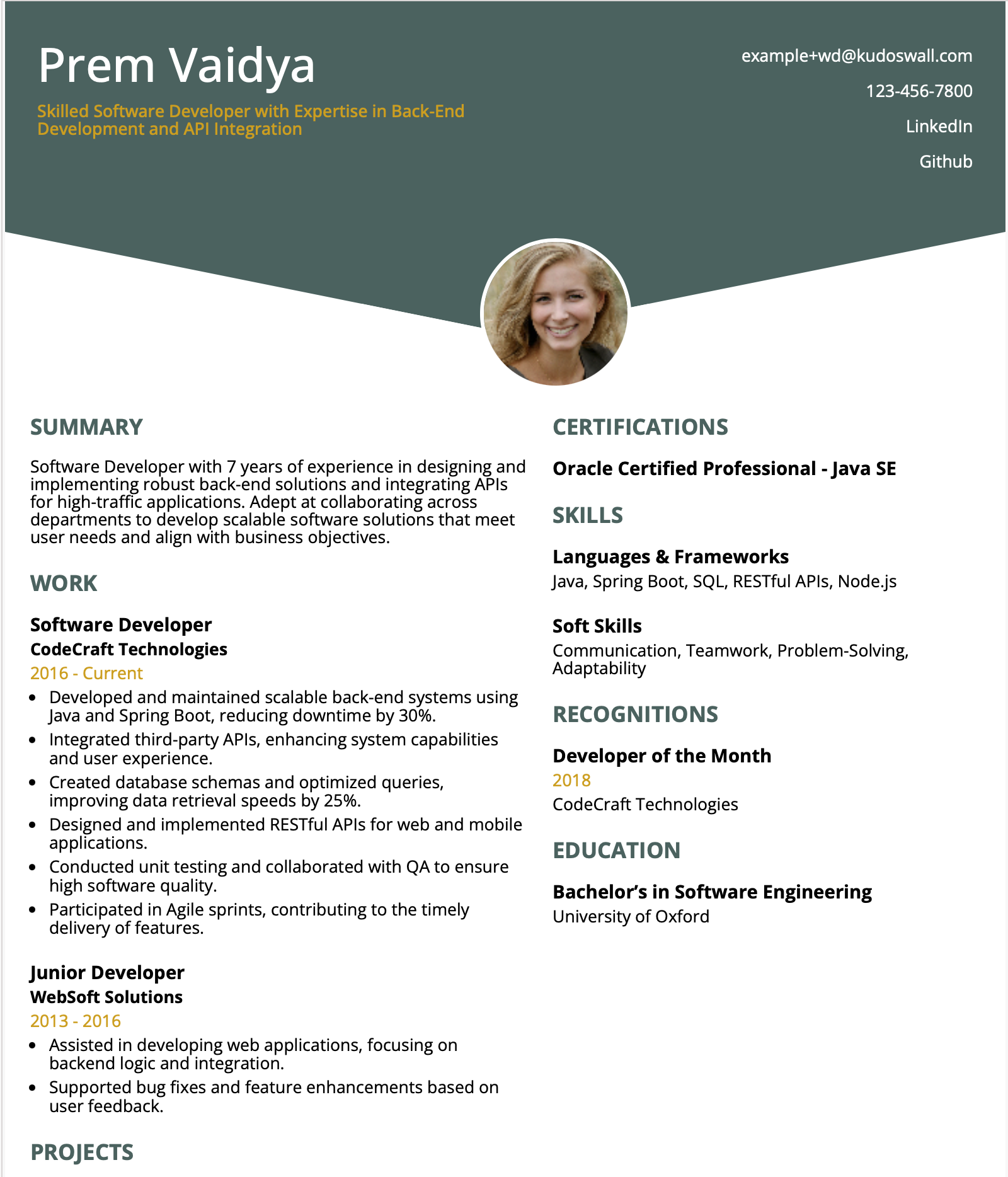
Showcasing your technical skills and projects requires strategic presentation. Start with a dedicated skills section that categorizes your competencies logically—listing languages, frameworks, tools, and methodologies like Agile or DevOps. Prioritize the most relevant and advanced skills first, especially those mentioned in the job descriptions you’re eyeing. Use clear subcategories to avoid overwhelming the reader, and consider including proficiency levels or years of experience to provide context.
When describing your projects, go beyond basic descriptions. Highlight the problem you solved, the technologies used, your specific contributions, and the project’s scope or outcomes. For example, mention if a project improved system efficiency by a quantifiable percentage or increased user engagement significantly. Incorporate links to repositories, live demos, or portfolios whenever possible, as they provide tangible proof of your expertise. Demonstrating a deep understanding of your technical work with detailed, impactful project descriptions helps recruiters see the real-world applications of your skills and your ability to deliver results.
Formatting and Structure: Optimizing Your Developer CV for ATS

An often-overlooked aspect of how to write a professional developer CV is ensuring it is ATS-friendly. Many companies leverage ATS software to filter applicants, meaning your CV must be optimized for keywords and proper formatting. Use a simple, clean structure with clear headings such as “Professional Summary,” “Skills,” “Experience,” “Projects,” and “Education.” Avoid intricate layouts, graphics, or unusual fonts that may confuse ATS algorithms.
In terms of formatting, adopt consistent bullet points, logical hierarchies, and proper keyword density. Incorporate keywords naturally within context—don’t just list them separately—since ATS scans for relevance. Use standard section titles and avoid tables or columns that might get misread. Lastly, save your CV as a straightforward PDF or Word document to maintain formatting integrity. Proper structuring not only ensures your CV is parsed correctly by ATS but also enhances readability for recruiters, making it easier to spot your key qualifications quickly.
Quantifying Achievements: Showcasing Your Impact as a Developer
One of the most powerful ways to stand out is by quantifying your achievements. Rather than simply listing responsibilities, demonstrate the tangible impact of your work through metrics. For example, state how you optimized a process that reduced load times by a specific percentage, or how your code deployment strategies increased deployment frequency, thus supporting faster releases.
Quantification provides concrete proof of your capabilities, making your contributions more credible. Employers want to see evidence that you bring value—whether it’s through improved performance, increased user satisfaction, cost savings, or scalability enhancements. Incorporate these metrics into your experience descriptions as much as possible and, where feasible, back them up with data or client/testimonial quotes. Showing your impact in numbers not only captures attention but also conveys your results-driven mindset—an essential trait for standout developers.
Tailoring Your Developer CV to Specific Job Requirements
A generic CV rarely lands interviews; tailoring your CV for each role is crucial. Carefully read the job description and identify key skills, experiences, and qualifications the employer prioritizes. Customize your Professional Summary to reflect your alignment with these specific needs, highlighting the most relevant skills and projects. For example, if a role emphasizes cloud computing, emphasize your experience with AWS, Azure, or Google Cloud.
This targeted approach demonstrates genuine interest and effort, helping your CV resonate more with recruiters and ATS. Use the company’s language and keywords, and consider emphasizing soft skills that align with the company culture or role’s specifics. Adjusting your CV to each application may take additional time but significantly increases your chances of making a meaningful impression and ultimately securing an interview.
Avoiding Common Mistakes in Developer CV Writing
Many talented developers falter by making avoidable errors that hinder their chances. One common mistake is cluttering the CV with excessive information or technical jargon that doesn’t add value. Focus on clarity and relevance, emphasizing your most compelling skills and accomplishments. Conversely, some candidates underestimate the importance of soft skills or project impact, which can make their CV seem one-dimensional.
Another pitfall is neglecting to proofread meticulously; typos or grammatical errors undermine professionalism. Also, avoid using vague statements like “worked on various projects”—be specific about your role, technologies, and outcomes. Lastly, failing to keep the CV updated or personalized per application can signal a lack of effort or diligence. Consistently refining and customizing your CV demonstrates professionalism, attention to detail, and genuine enthusiasm—traits that employers highly value.
Conclusion
Mastering how to write a professional developer CV revolves around strategic presentation, targeted customization, and showcasing impact through quantifiable achievements. By crafting a clear structure, highlighting relevant skills and projects, optimizing for ATS, and avoiding common mistakes, developers can craft CVs that truly reflect their competencies and attract hiring managers’ attention. Remember, your CV is your professional story—make it compelling, precise, and aligned with the goals of your desired role to maximize your chances of landing that next great opportunity.
🚀 Preparing for tech interviews?
Boost your skills with IT Interview Prep — practice real questions, track your progress, and get ready to ace your next interview!
👉 Download now on Google Play









-
Tagged flutter, mobile-dev, react-native